Built on WIX Headless (opens in a new tab)
St. Vincent de PaulChurch & Academy Search Bulletin Give

Learn

The Traditional Latin Mass in Kansas City

A short introduction for newcomers and for anyone who wishes to pray the Mass more deeply.

Plan Your Visit Mass & Confession Times 

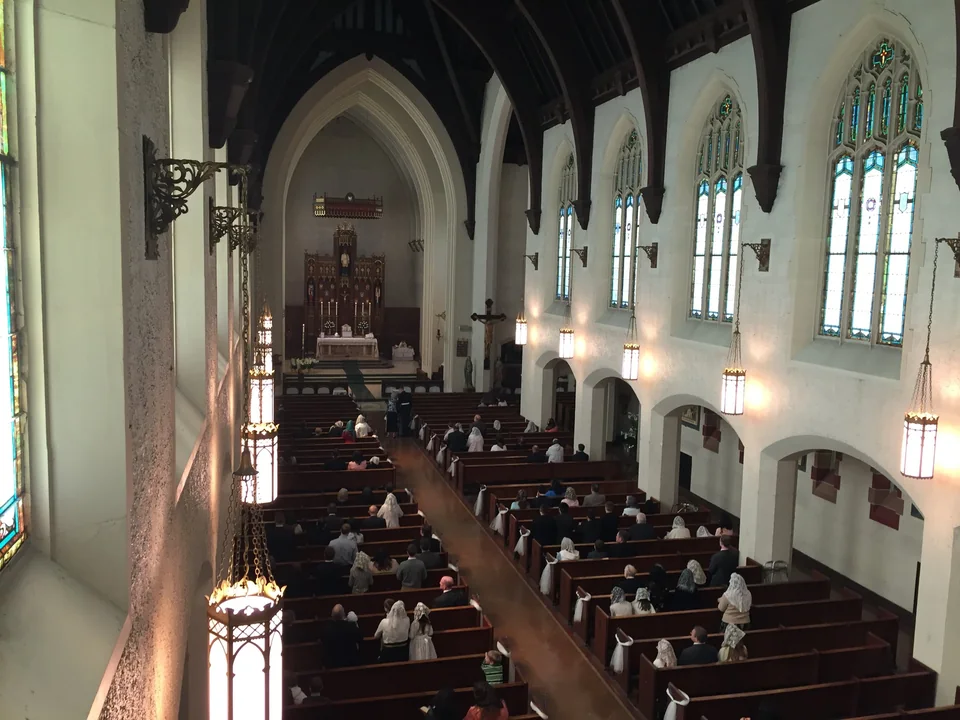
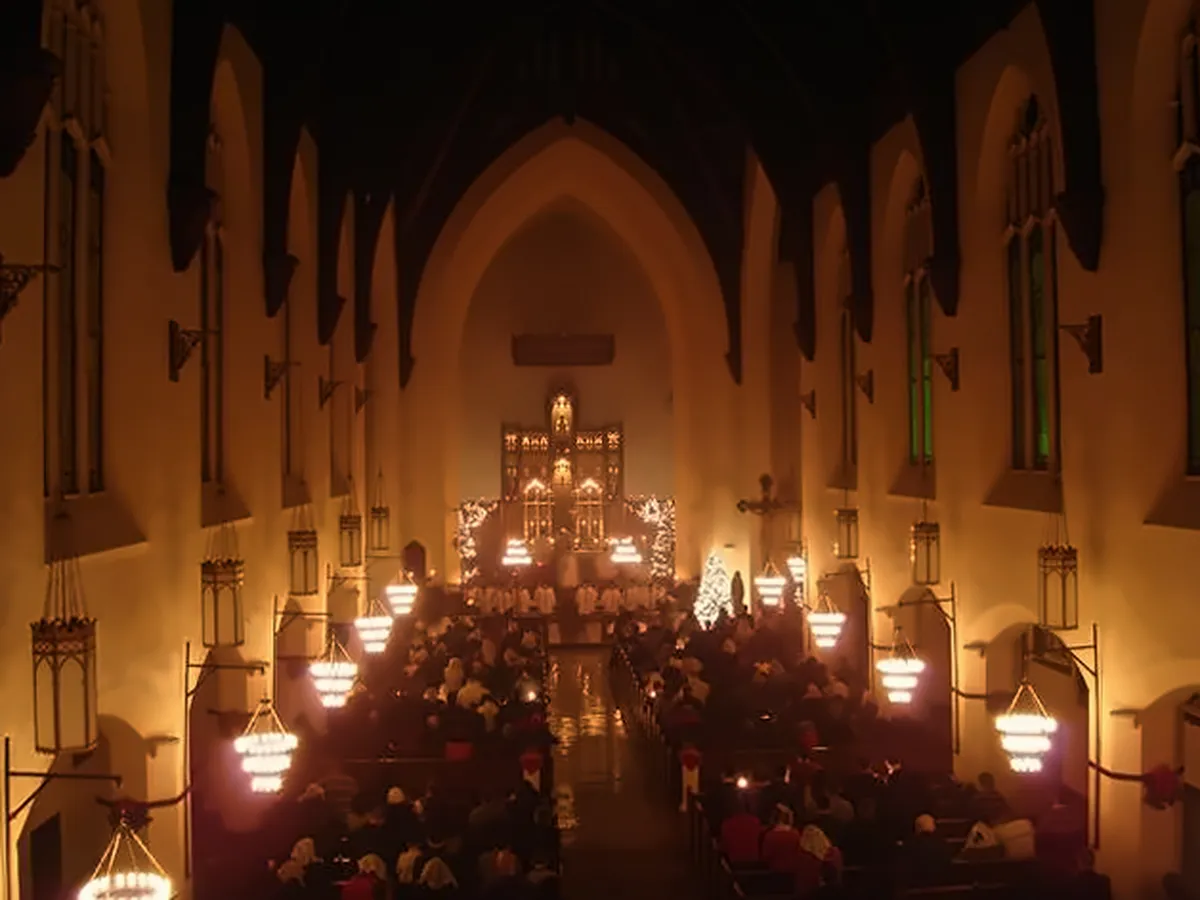
St. Vincent de Paul Church at Christmas Midnight Mass, seen from the choir loft: a full nave glowing with hanging lanterns and candlelight, the carved high altar lit at the far end beneath the Gothic arches

Discover the Latin Mass

Eight short subjects. Read the summary, then open any subject to learn more.

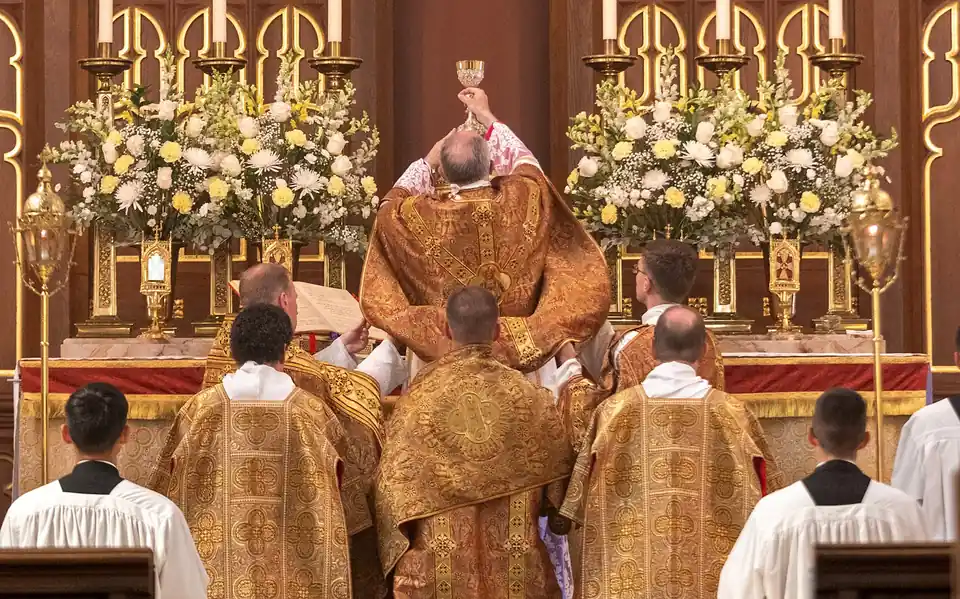
The priest raises the chalice at the high altar, clergy in gold vestments beside him and servers kneeling in the sanctuary, seen from behind

What the Mass is

The Mass is the unbloody renewal of the Sacrifice of Our Lord on the Cross, offered to God by the priest at the altar.

Read moreShow less: What the Mass is

The form of the Roman Rite offered at St. Vincent de Paul is often called the Traditional Latin Mass or the Tridentine Mass, after the Council of Trent. Pope St. Pius V codified it in the Roman Missal of 1570, and its prayers and ceremonies reach back many centuries before that.

Words to know MissalConsecration
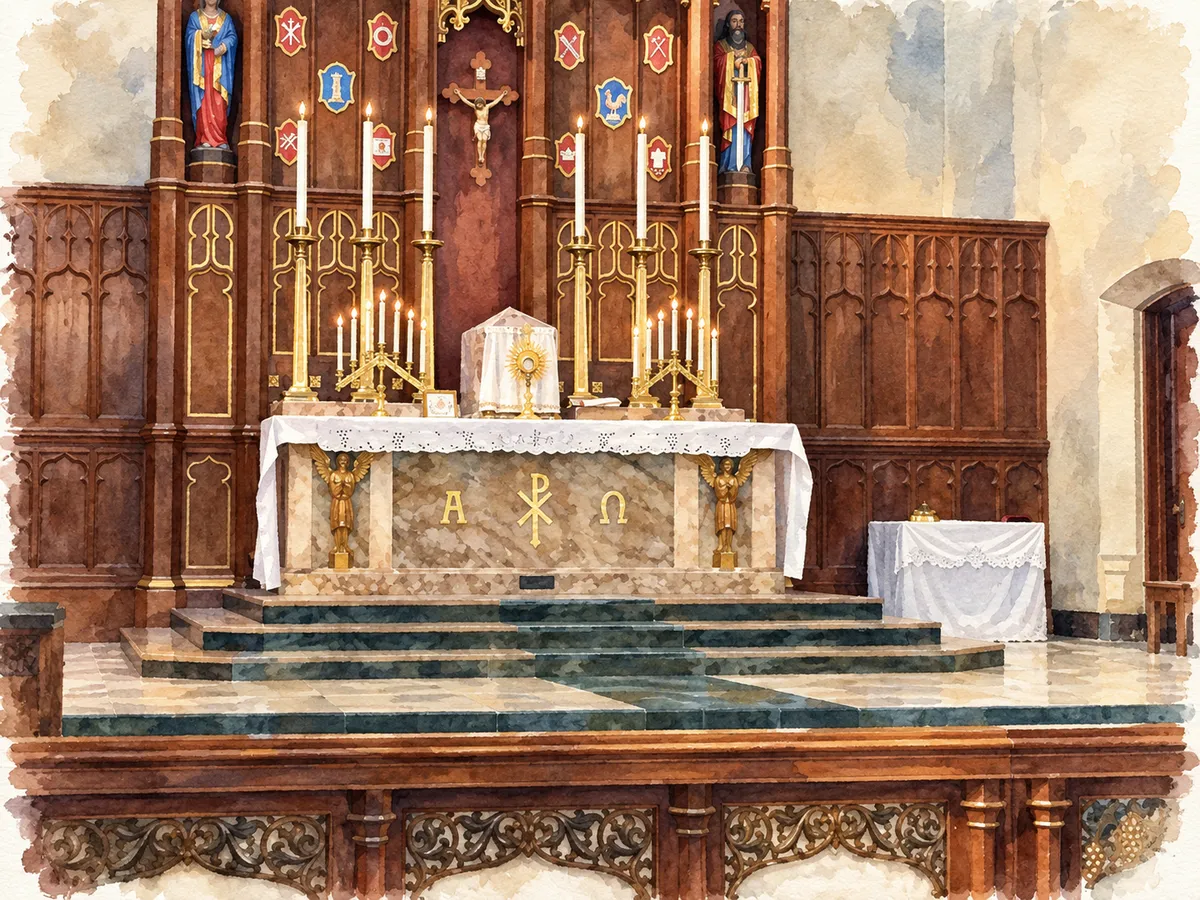
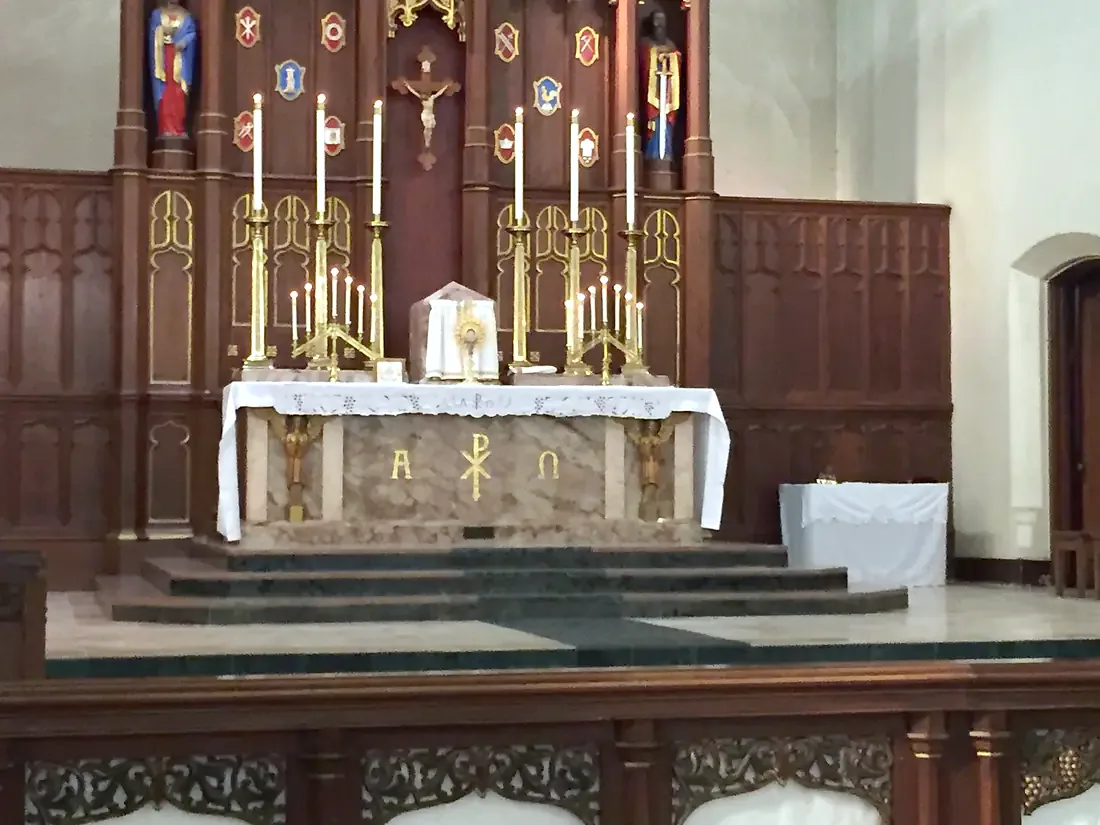
A watercolor of the carved Gothic high altar of St. Vincent de Paul, with candles, statues and the crucifix above the marble altar

Why Latin?

Latin has been the language of the Roman Rite for well over a thousand years.

Read moreShow less: Why Latin?

A fixed sacred language guards the exact meaning of the prayers, and it unites Catholics across nations and centuries: the same words are prayed at the altar in Kansas City as in Rome. The readings are often also read in English before the sermon, and a hand missal gives an English translation beside the Latin.

Words to know MissalEpistle and Gospel

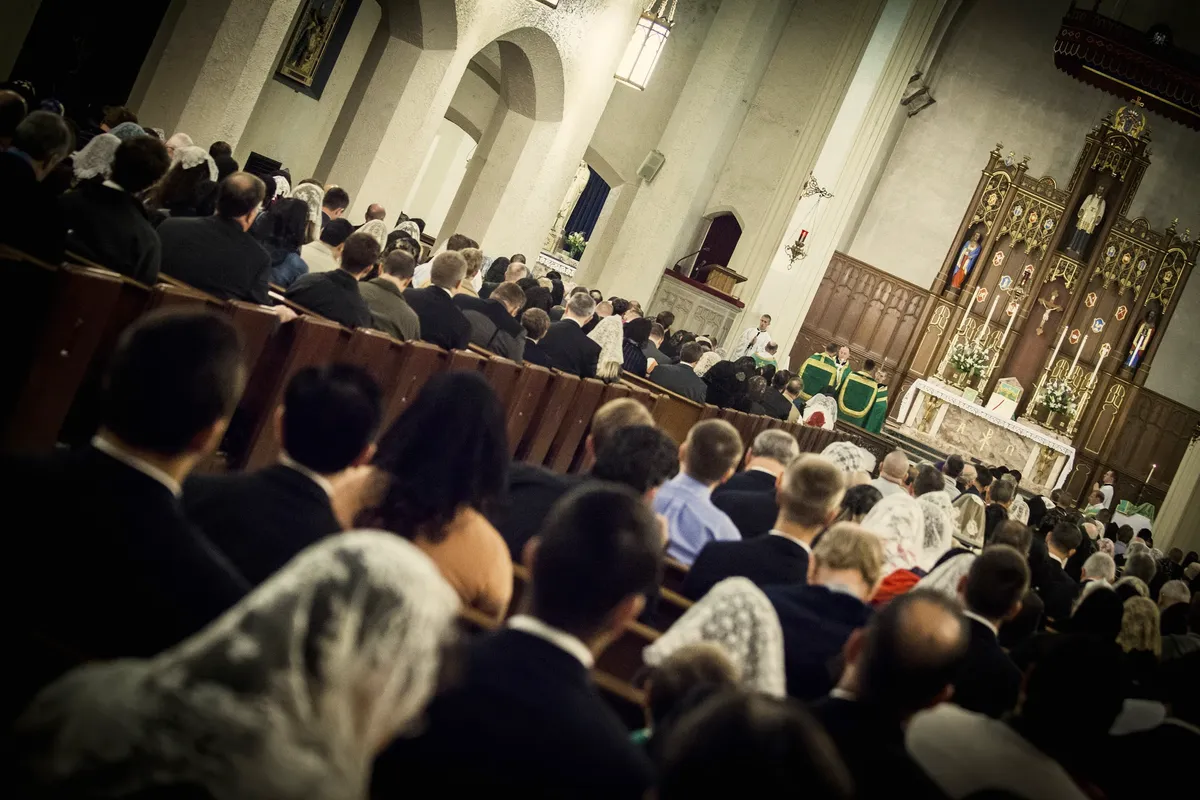
An angled view across a full congregation during Mass at St. Vincent de Paul Church, looking toward the carved Gothic high altar

Facing the altar

The priest and the people face the same direction, toward the altar and the crucifix, traditionally toward the east.

Read moreShow less: Facing the altar

The priest stands at the head of the faithful, leading them in offering the Sacrifice to God.

Words to know Sanctuary

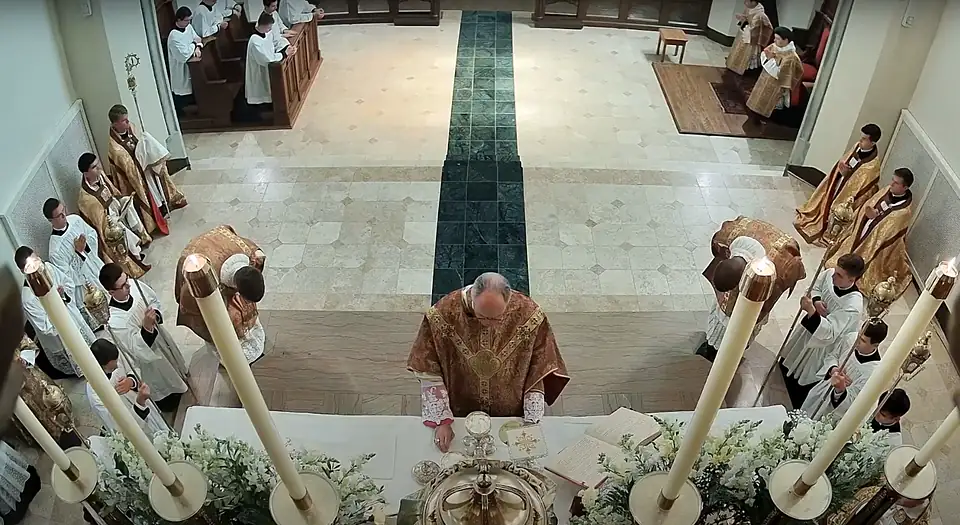
Seen from directly above the high altar, a celebrant in gold vestments stands at the altar between tall white candles and white flowers, with ministers in gold copes and servers in surplices lining the sanctuary below

The parts of the Mass

The Mass has two parts: the Mass of the Catechumens, which prepares the soul, and the Mass of the Faithful, the Sacrifice itself.

Read the full explanationShow less: The parts of the Mass

The Mass of the Catechumens prepares the soul: the prayers at the foot of the altar, the Introit, the Kyrie, the Gloria (on many days), the Collect, the Epistle and the Gospel, and on Sundays and greater feasts the Creed. The Mass of the Faithful is the Sacrifice itself: the Offertory, the Canon with the Consecration, when the bread and wine become the Body and Blood of Christ, the Pater Noster, Holy Communion, and the final blessing and Last Gospel.

Listen KyrieGloriaCredo

Words to know IntroitKyrieGloriaCollectEpistle and GospelOffertoryCanonConsecrationLast Gospel

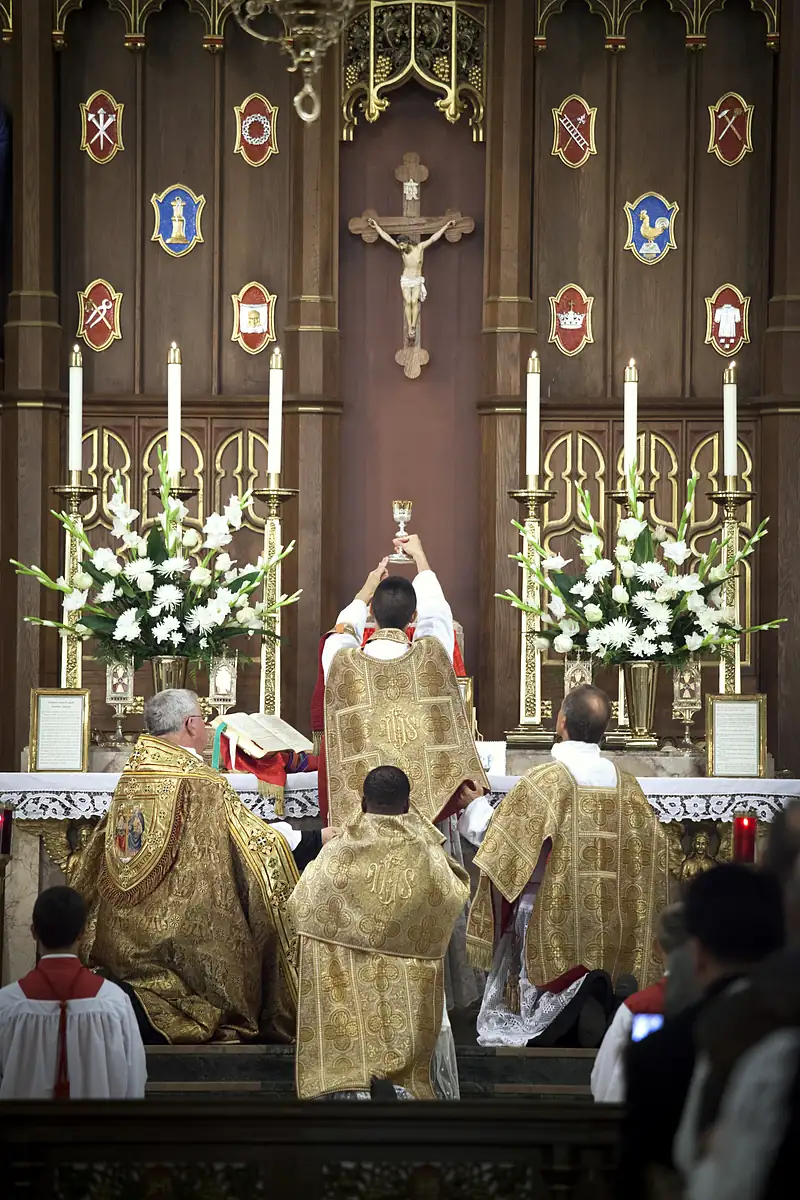
The elevation at the high altar, with ministers at the altar and altar servers in cassock and surplice kneeling on the steps

Low Mass and High Mass

At a Low Mass the priest speaks the prayers, many of them quietly, assisted by servers. At a High Mass (Missa Cantata) the priest sings parts of the Mass and the choir sings the chants.

Read moreShow less: Low Mass and High Mass

A Solemn High Mass adds a deacon and subdeacon.

Words to know Low MassMissa CantataSolemn High Mass

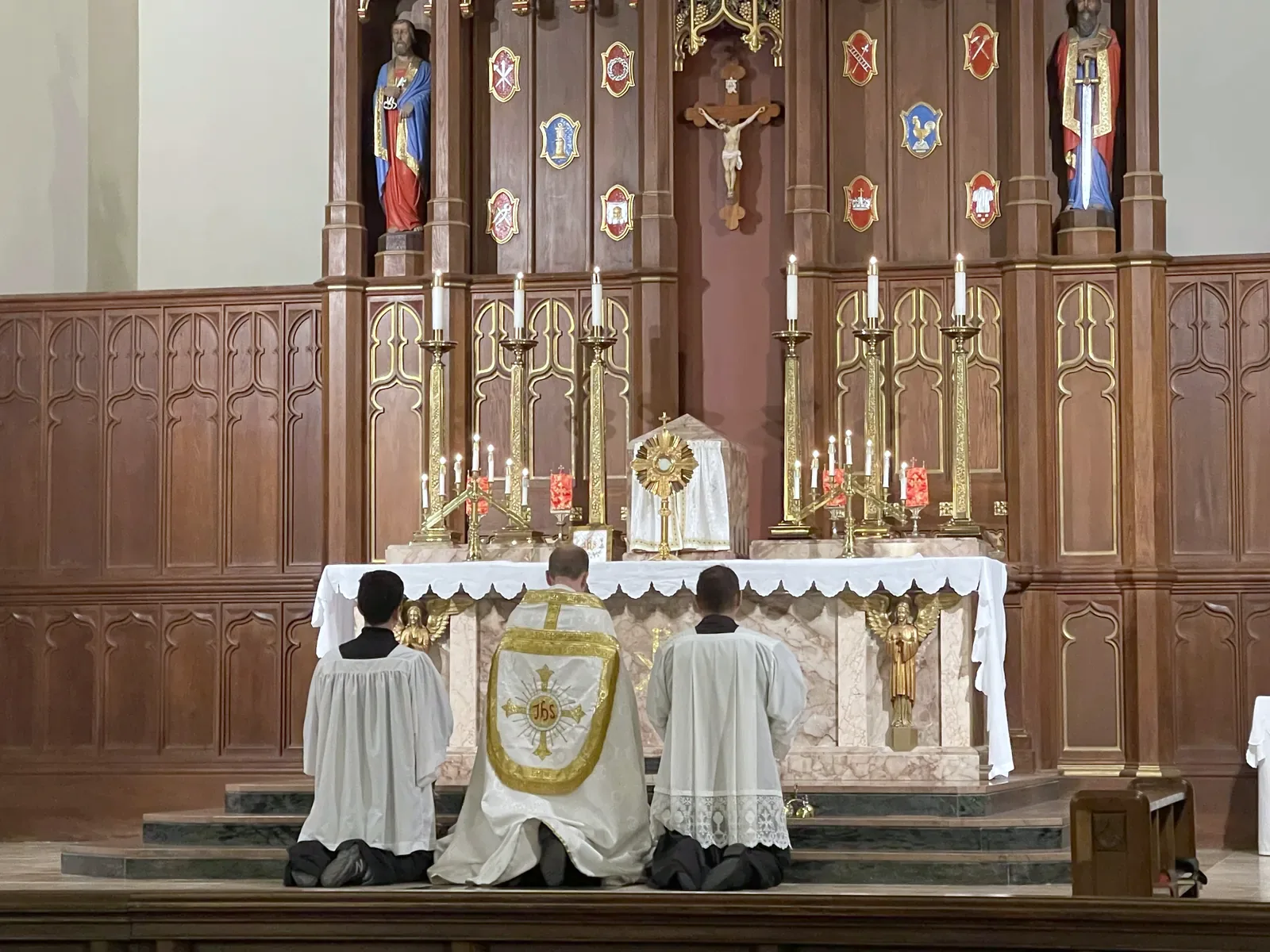
A priest in a gold cope kneels in prayer at the foot of the high altar between two kneeling altar servers in cassocks and surplices, seen from behind

Silence, chant and posture

Much of the Canon is prayed silently, a silence that invites adoration. Gregorian chant is the Church’s own music for the Roman liturgy.

Read moreShow less: Silence, chant and posture

The faithful kneel for much of the Mass, especially from the Sanctus through the Consecration, and receive Holy Communion kneeling and on the tongue.

Listen Sanctus

Words to know CanonElevation

The high altar of St. Vincent de Paul with its candles and carved reredos, seen across the carved wooden altar rail

Receiving Holy Communion

At Holy Communion we try to give our very best to God, who is truly present in the Blessed Sacrament. Catholics who are in the state of grace and have kept the Eucharistic fast may come forward and receive kneeling at the altar rail, on the tongue. If you are not Catholic, or are not prepared to receive today, you are just as welcome.

Read moreShow less: Receiving Holy Communion

Please stay in your pew and let others pass, and join us in honoring Our Lord with a quiet prayer. You are welcome to speak with a priest after Mass. The Church requires a fast of at least one hour before Holy Communion. Following the Church’s older discipline, the Society of St. Pius X recommends three hours from solid food and alcoholic drinks and one hour from other liquids. Water and medicine never break the fast.

Listen Agnus Dei

Words to know Altar rail

The nave seen from the choir loft: the faithful in the pews, the high altar at the far end, and hanging lanterns along the walls

Following along

Do not worry about following every word on your first visit. Watch, listen and pray.

Read moreShow less: Following along

A hand missal helps; many people also pray the Rosary or simply unite their intentions with the priest. See Plan Your Visit for practical details, and Mass & Confession Times. To learn about the priests who serve St. Vincent’s, see Who We Are.

Words to know MissalPropersOrdinary

Next: listen to the sacred chants 

Sung at High Mass

The Sung Ordinary of the Mass

Five prayers of the Mass are sung to Gregorian chant at every High Mass. Choose a page to listen.

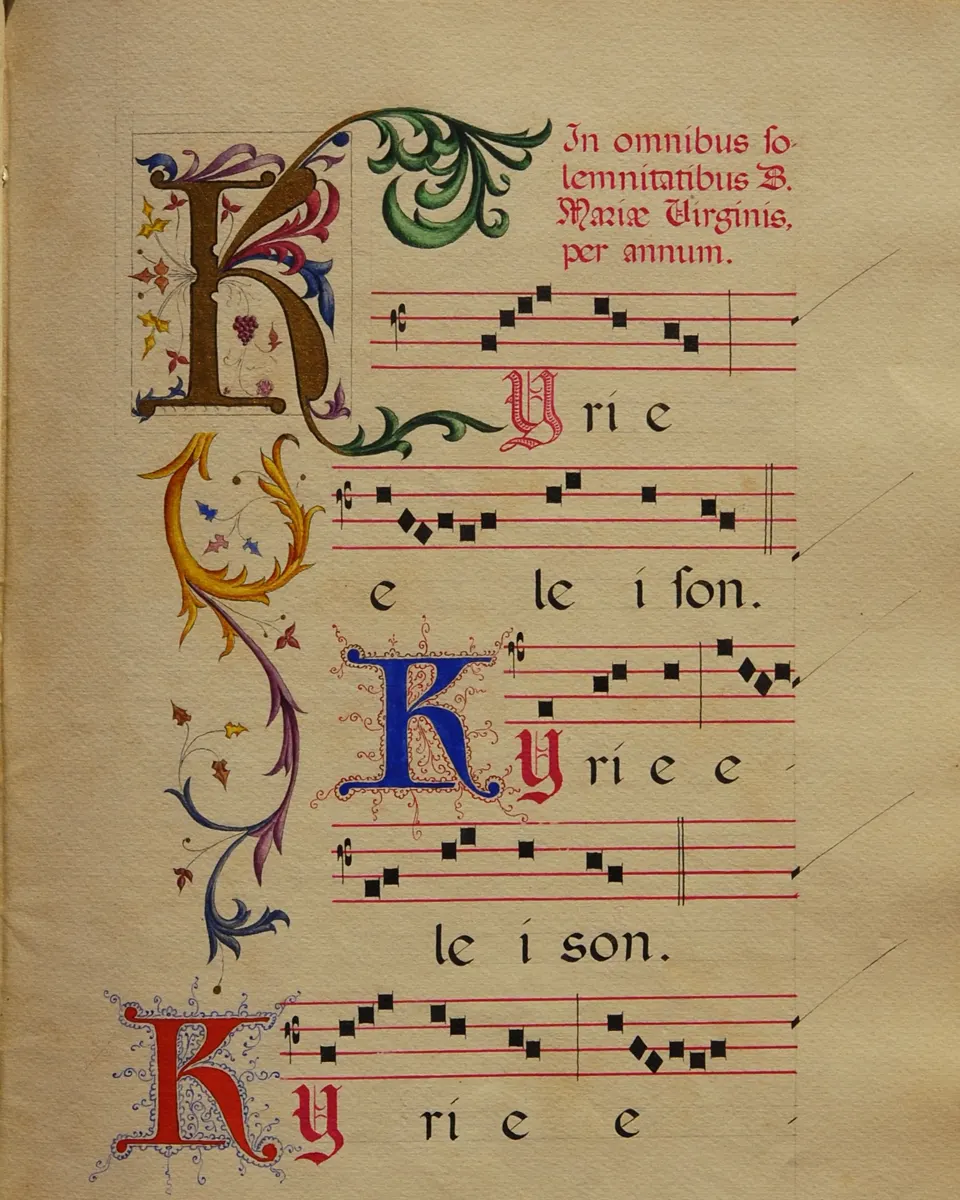
A choir-book page with a gold and blue illuminated K, red staff lines and square notes for the Kyrie
Liber choralis of S. Leonardi, Kyrie (public domain) (opens in a new tab)

Chant 1 of 5 · Sung at High Mass

Kyrie

“Lord, have mercy. Christ, have mercy.”

Sung at the beginning of Mass, after the Introit. Its nine invocations are addressed to the three Persons of the Blessed Trinity.

Recording Mass VIII (De Angelis) — Schola Bellarmina

Where it comes in the MassShow less
  1. Prayers at the foot of the altar
  2. Introit
  3. Kyrie (this chant)
  4. Gloria
  5. Collect
  6. Epistle and Gospel
  7. Credo
  8. Offertory
  9. Preface
  10. Sanctus
  11. Canon and Consecration
  12. Pater Noster
  13. Agnus Dei
  14. Holy Communion
  15. Blessing and Last Gospel

From the glossary "Lord, have mercy" in Greek, said or sung nine times.

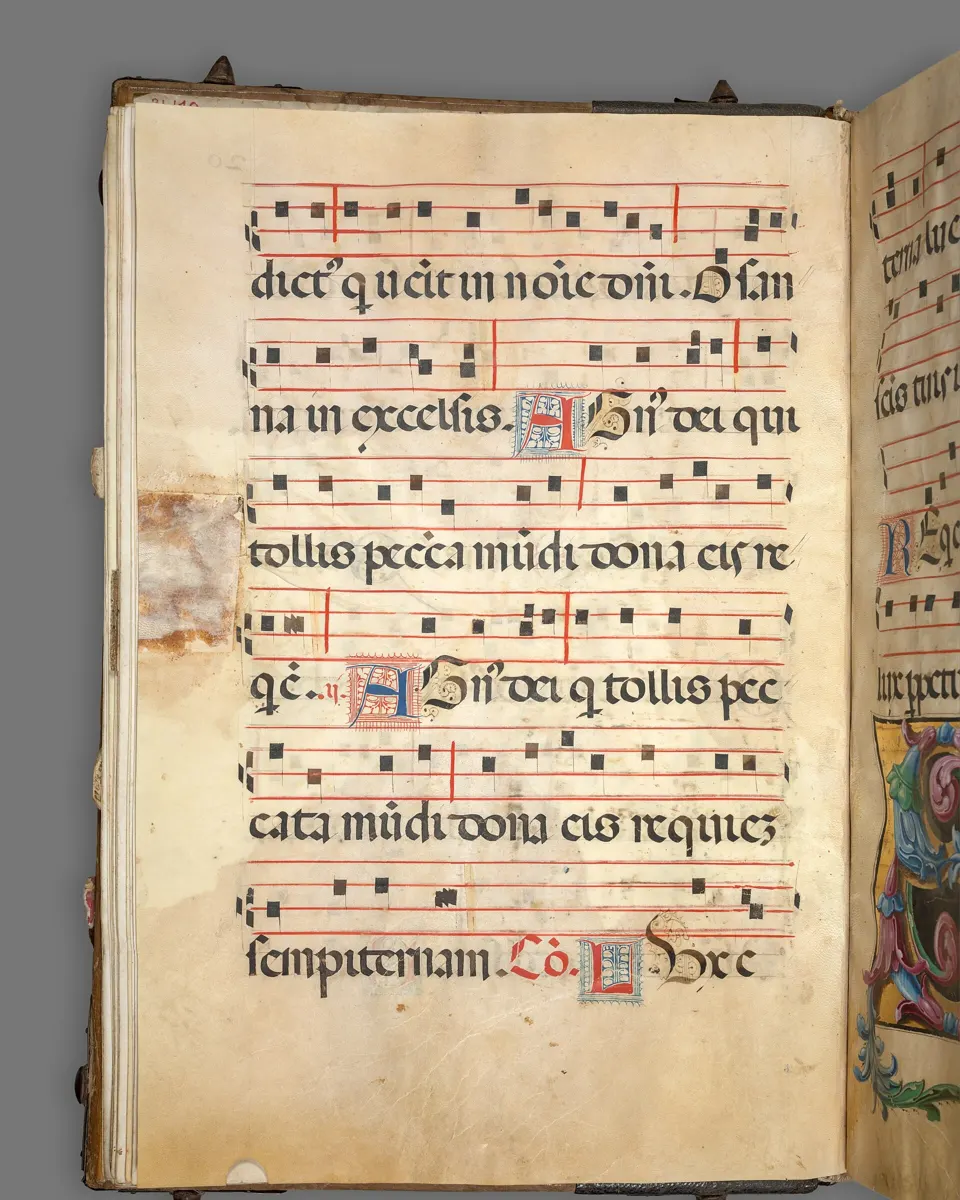
A gradual page of square notes on red staves with the words of the Gloria and small red initials
Gradual leaf, Girolamo dai Libri, c. 1520, Cleveland Museum of Art (CC0) (opens in a new tab)

Chant 2 of 5 · Sung at High Mass

Gloria

“Glory to God in the highest, and on earth peace to men of good will.”

The hymn of the angels at the birth of Christ, sung after the Kyrie. Because of its joyful character, it is omitted in penitential seasons such as Advent and Lent.

Recording Mass VIII (De Angelis) — Schola Bellarmina

Where it comes in the MassShow less
  1. Prayers at the foot of the altar
  2. Introit
  3. Kyrie
  4. Gloria (this chant)
  5. Collect
  6. Epistle and Gospel
  7. Credo
  8. Offertory
  9. Preface
  10. Sanctus
  11. Canon and Consecration
  12. Pater Noster
  13. Agnus Dei
  14. Holy Communion
  15. Blessing and Last Gospel

From the glossary The hymn "Glory to God in the highest", said or sung on Sundays and feasts outside Advent and Lent.

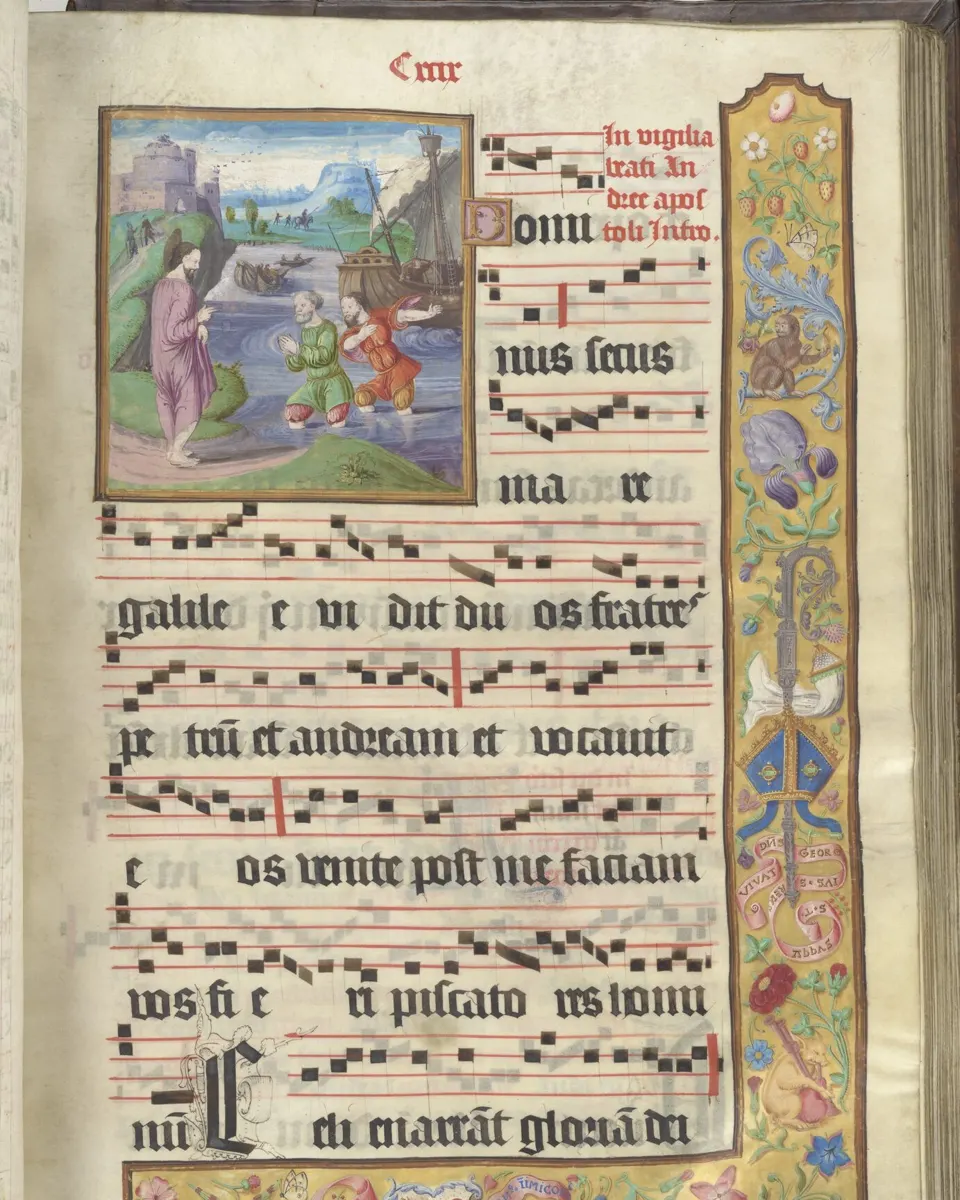
An illuminated gradual page with a painted scene, a decorated border and square notes on red staves
Gradual of the Abbey of Sint-Truiden, Bibliotheek Hasselt Limburg (public domain) (opens in a new tab)

Chant 3 of 5 · Sung at High Mass

Credo

“I believe in one God”: the Creed, the Catholic Faith professed in song.

Sung after the Gospel and the sermon on Sundays and greater feasts: the faithful profess together the Faith handed down from the Apostles.

Recording Credo III — Schola Bellarmina

Where it comes in the MassShow less
  1. Prayers at the foot of the altar
  2. Introit
  3. Kyrie
  4. Gloria
  5. Collect
  6. Epistle and Gospel
  7. Credo (this chant)
  8. Offertory
  9. Preface
  10. Sanctus
  11. Canon and Consecration
  12. Pater Noster
  13. Agnus Dei
  14. Holy Communion
  15. Blessing and Last Gospel

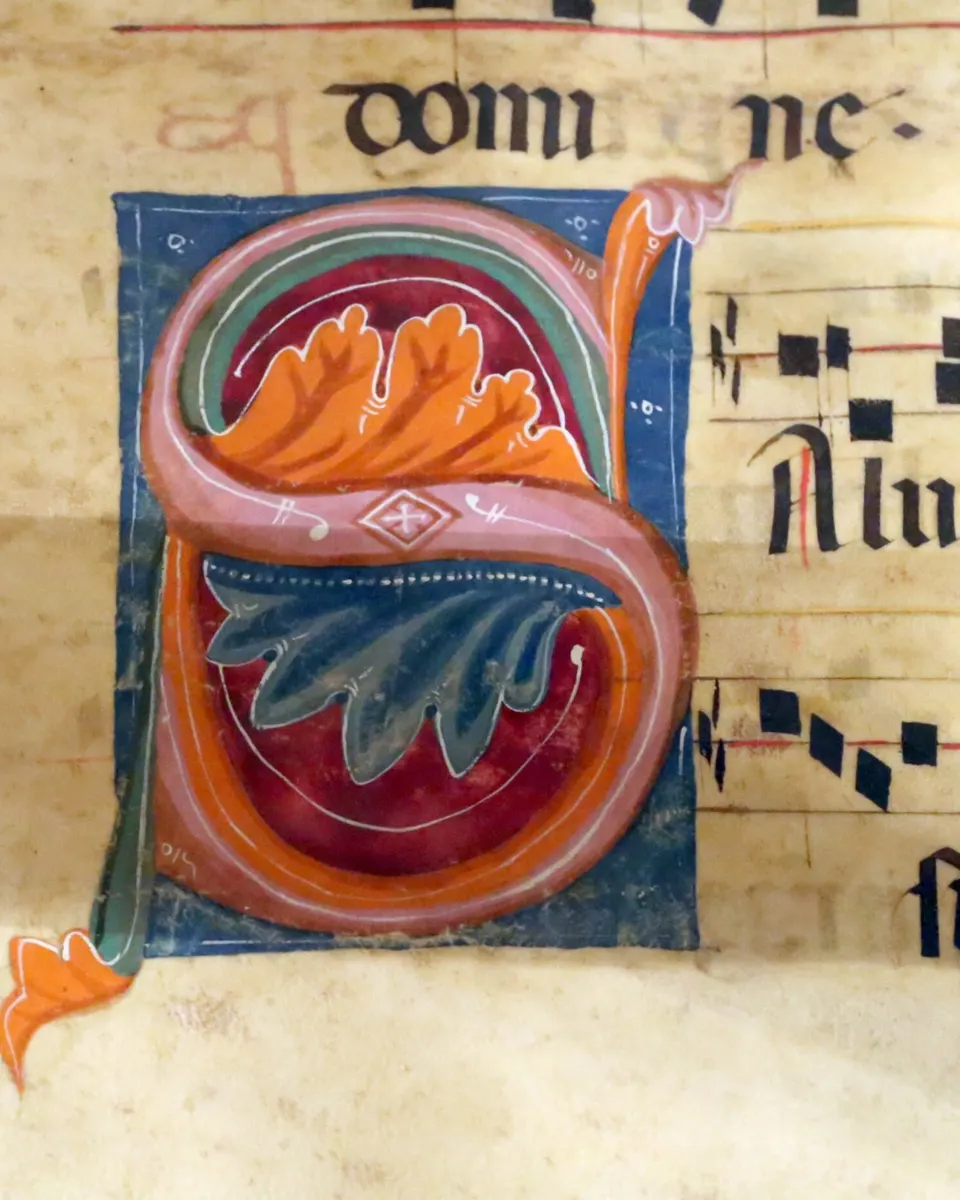
A large illuminated initial S in blue, red and gold beside square notes on a red staff
Gradual I of the Collegiata of Guardiagrele, 1333, photo Sailko (CC BY-SA 4.0) (opens in a new tab)

Chant 4 of 5 · Sung at High Mass

Sanctus

“Holy, holy, holy, Lord God of hosts.”

Sung at the end of the Preface, just before the Canon, echoing the praise the angels sing in heaven. The most sacred part of the Mass follows.

Recording Mass VIII (De Angelis) — Schola Bellarmina

Where it comes in the MassShow less
  1. Prayers at the foot of the altar
  2. Introit
  3. Kyrie
  4. Gloria
  5. Collect
  6. Epistle and Gospel
  7. Credo
  8. Offertory
  9. Preface
  10. Sanctus (this chant)
  11. Canon and Consecration
  12. Pater Noster
  13. Agnus Dei
  14. Holy Communion
  15. Blessing and Last Gospel

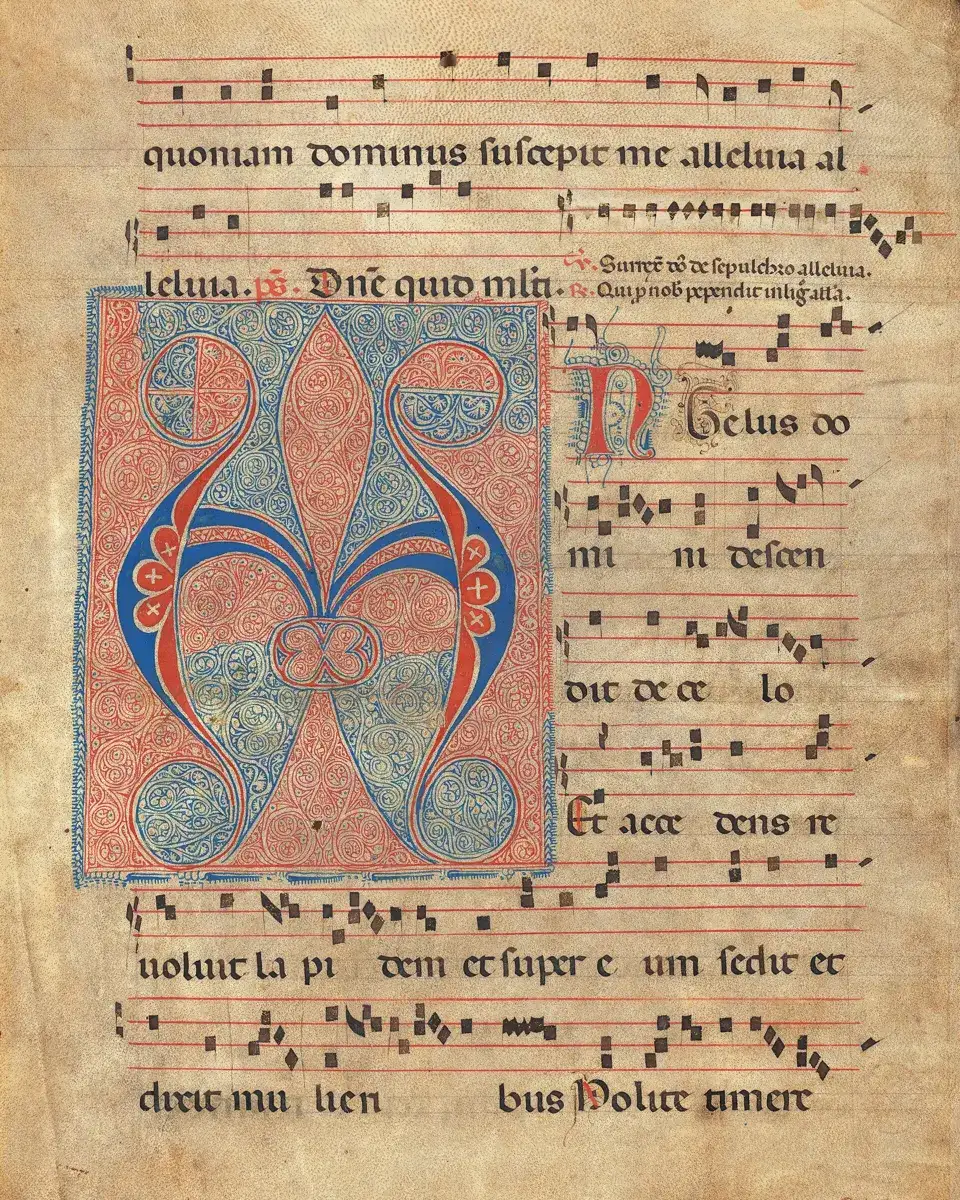
A choir-book folio with a large decorated initial A in red and blue and square notes on red staves
Antiphonal folio with decorated initial A, 14th–15th century, Chester Beatty Library (public domain) (opens in a new tab)

Chant 5 of 5 · Sung at High Mass

Agnus Dei

“Lamb of God, who takest away the sins of the world, have mercy on us.”

Sung after the Pater Noster, as Holy Communion draws near. It calls upon Christ, the Lamb of God, and prepares the soul to receive Him.

Recording Mass VIII (De Angelis) — Schola Bellarmina

Where it comes in the MassShow less
  1. Prayers at the foot of the altar
  2. Introit
  3. Kyrie
  4. Gloria
  5. Collect
  6. Epistle and Gospel
  7. Credo
  8. Offertory
  9. Preface
  10. Sanctus
  11. Canon and Consecration
  12. Pater Noster
  13. Agnus Dei (this chant)
  14. Holy Communion
  15. Blessing and Last Gospel

A Short Glossary

Words you may hear or see in a missal, each explained in one line.

  • Agnus Dei

    "Lamb of God", said or sung three times before Holy Communion.

  • Altar rail

    The low railing before the sanctuary, where the faithful kneel to receive Holy Communion.

  • Angelus

    A prayer in honor of the Incarnation, traditionally prayed morning, noon and evening at the ringing of a bell.

  • Archbishop Lefebvre

    Archbishop Marcel Lefebvre (1905–1991), the French missionary archbishop who founded the Society of St. Pius X in 1970.

  • Asperges

    The sprinkling of the people with holy water before the principal Sunday Mass, while the choir sings "Asperges me" (in Paschaltide, "Vidi aquam").

  • Benediction

    A devotion in which the priest blesses the faithful with the Blessed Sacrament, shown in a monstrance.

  • Biretta

    The square cap with three ridges worn by clergy, often on the way to and from the altar.

  • Canon

    The central, unchanging prayer of the Mass, which includes the Consecration. Much of it is prayed silently.

  • Cassock

    The long, close-fitting garment worn by clergy, black for priests.

  • Chasuble

    The outermost vestment, worn by the priest over the others to offer Mass.

  • Collect

    The prayer of the day, said or sung by the priest before the Epistle.

  • Confiteor

    The prayer "I confess", said at the foot of the altar at the beginning of Mass.

  • Consecration

    The moment when, by the words of Our Lord spoken by the priest, the bread and wine become His Body and Blood.

  • Credo

    The Creed, "I believe in one God", said or sung after the Gospel on Sundays and certain feasts.

  • Divine Office

    The Church’s official daily prayer of psalms, hymns and readings, prayed at set hours of the day. Priests are bound to pray it.

  • Elevation

    The priest lifts the Sacred Host and then the Chalice for the faithful to adore, as a bell is rung.

  • Ember Days

    The Wednesday, Friday and Saturday in each of the four seasons of the year, kept with fasting and prayer.

  • Epistle and Gospel

    The two readings of the Mass, from the letters of the Apostles (or another book of Scripture) and from the Gospels.

  • Extreme Unction

    The sacrament of anointing for the seriously ill and the dying.

  • First Friday

    Receiving Holy Communion on the first Friday of nine months in a row, in honor of the Sacred Heart of Jesus.

  • First Saturday

    The devotion asked by Our Lady at Fatima: on the first Saturday of five months in a row, Confession, Holy Communion, five decades of the Rosary and fifteen minutes of meditation on its mysteries, in reparation to her Immaculate Heart.

  • Gloria

    The hymn "Glory to God in the highest", said or sung on Sundays and feasts outside Advent and Lent.

  • Gradual

    The chant between the Epistle and the Gospel, followed by the Alleluia (or the Tract in penitential seasons).

  • Humeral veil

    The long veil worn over the shoulders, covering the hands, to hold the monstrance or the sacred vessels.

  • Introit

    The entrance chant that opens the proper of each Mass.

  • Kyrie

    "Lord, have mercy" in Greek, said or sung nine times.

  • Last Gospel

    The beginning of the Gospel of St. John, read by the priest at the end of Mass.

  • Low Mass

    A Mass in which the priest speaks the prayers, without singing.

  • Maniple

    The narrow band of cloth worn on the priest’s left forearm at Mass.

  • Missa Cantata

    A sung High Mass, celebrated by a priest without a deacon and subdeacon.

  • Missal

    The book containing the prayers of the Mass. A hand missal gives the Latin with an English translation.

  • Monstrance

    The vessel, often gold and shaped like a sunburst, in which the Sacred Host is shown for adoration.

  • Novena

    Prayers offered on nine days in a row for a particular intention.

  • Offertory

    The part of the Mass in which the priest offers the bread and wine to God.

  • Ordinary

    The parts of the Mass that stay the same each day.

  • Priory

    A house where priests of a religious society live together and from which they serve the faithful nearby.

  • Propers

    The parts that change with the day or feast: the Introit, Collect, readings, chants and other prayers.

  • Requiem

    A Mass for the dead, named from its Introit, "Requiem aeternam" (Eternal rest). Black vestments are worn.

  • Rogation Days

    Days of prayer for God’s blessing on the fruits of the earth: April 25 and the three days before Ascension Thursday.

  • Rosary

    Decades of Hail Marys, each begun with an Our Father and ended with a Glory Be, prayed while meditating on the mysteries of the life of Our Lord and Our Lady.

  • Sacramental

    A blessed object or action, such as holy water, a scapular or a blessing, given by the Church to dispose us to receive grace.

  • Sanctuary

    The area around the altar, beyond the altar rail.

  • Sanctus

    "Holy, Holy, Holy", said or sung at the end of the Preface, just before the Canon.

  • Scapular

    Two small pieces of wool joined by cords and worn over the shoulders as a sign of devotion. The best known is the Brown Scapular of Our Lady of Mount Carmel.

  • Septuagesima

    The Sunday about seventy days before Easter, which begins the pre-Lenten season. The Gloria and the Alleluia are no longer said, and violet is worn.

  • Solemn High Mass

    A sung Mass in which the priest is assisted by a deacon and subdeacon.

  • SSPX

    The Society of St. Pius X, a society of priests founded by Archbishop Marcel Lefebvre in 1970.

  • Surplice

    The loose white garment with wide sleeves worn over the cassock by clergy and servers.

  • Tabernacle

    The locked receptacle on or near the altar where the Blessed Sacrament is reserved.

  • Vestments

    The garments the priest wears at the altar. Their color follows the feast or season: white, red, green, violet, rose or black.

All are welcome at the altar of God.

Plan Your Visit Mass & Confession Times 

Report a website problem

Something broken, missing or hard to read? Let us know about any problem with the website.