Sing to the Lord
Sacred Music and Church Choir
Cantate Domino canticum novum
“Sing ye to the Lord a new canticle.” Psalm 95:1
The choir and schola of St. Vincent de Paul sing Gregorian chant and sacred polyphony, the treasury of the Church’s music, to adorn the Traditional Latin Mass and to lift every heart to God.
Musica sacra
Chant and Polyphony
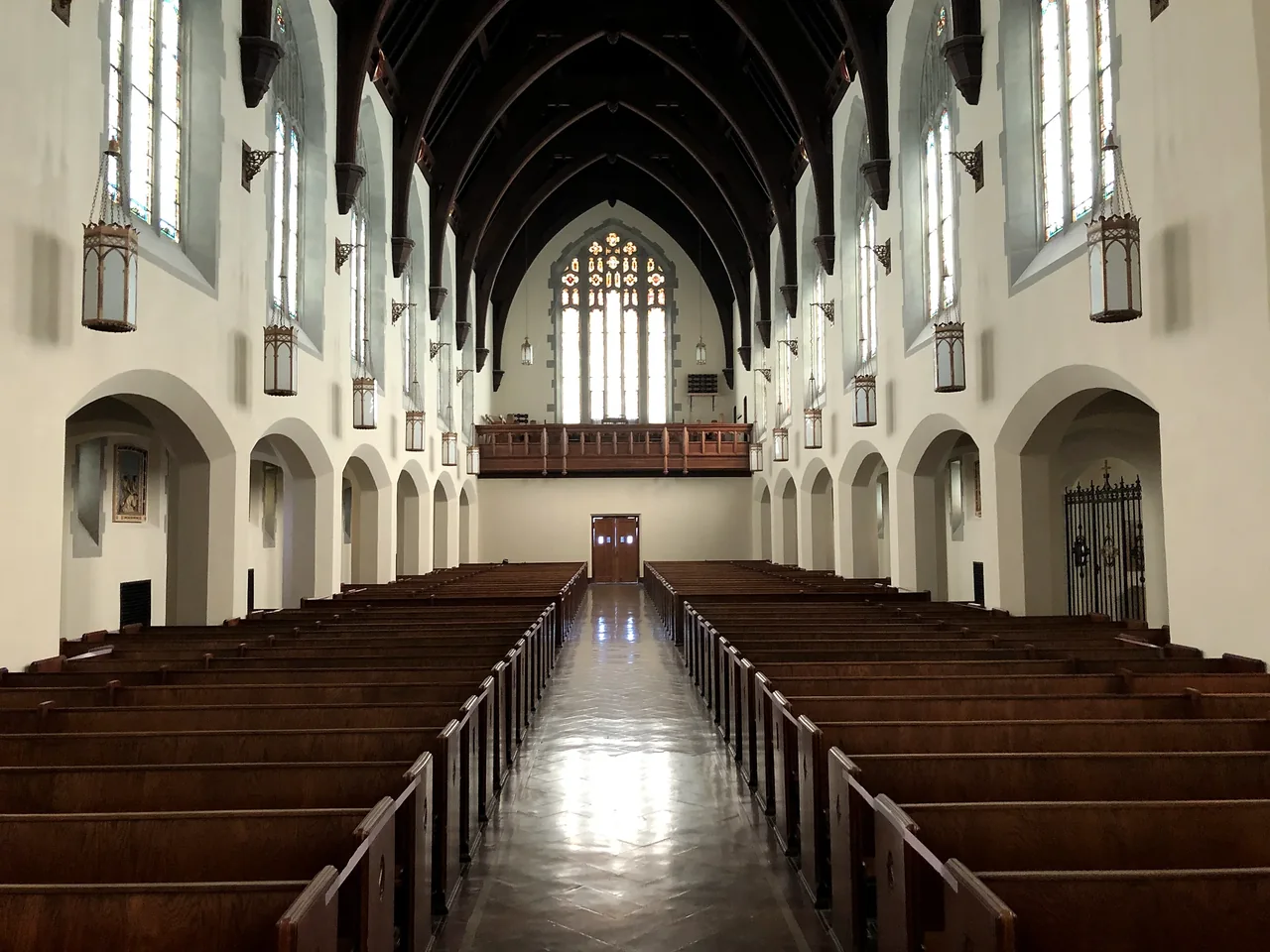
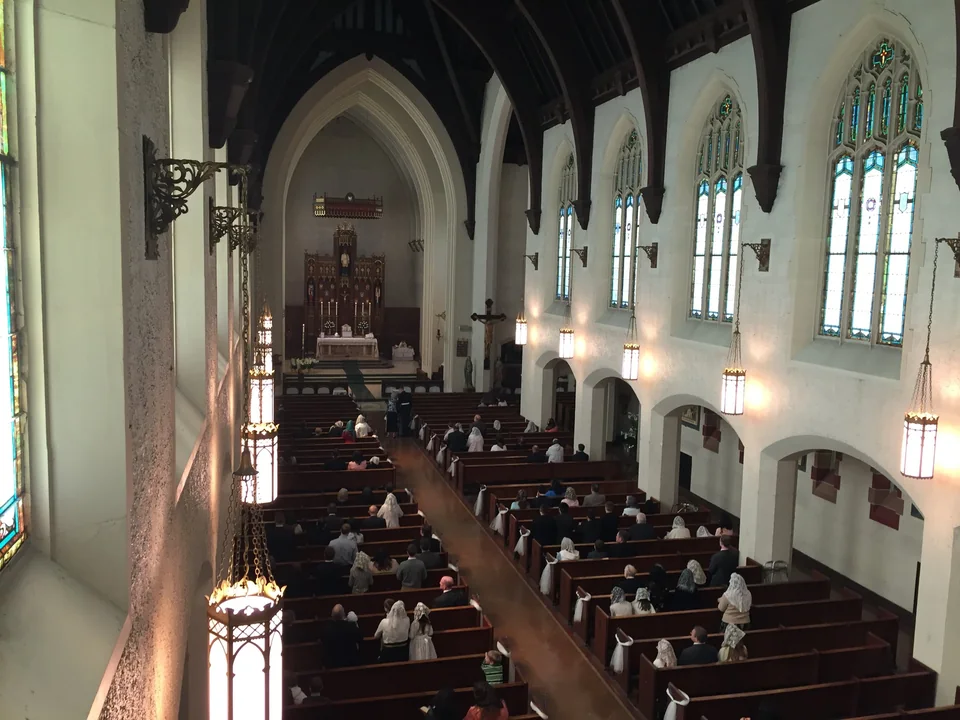
Sacred music has always served the Liturgy. At St. Vincent de Paul, our choir and schola sing Gregorian chant and polyphony at every Sunday High Mass, on feast days, and at some weddings and funerals.
The Church has gathered a great treasury of sacred music over the centuries, and two forms stand at its heart. Gregorian chant is her own song, a single line of melody that carries the sacred Latin words. Sacred polyphony weaves several voices together in harmony, building a cathedral of sound around those same words.
Both exist for one purpose: to give glory to God and to help souls pray. Sacred music speaks where words alone fall short. It quiets the mind, stirs the heart, and draws the soul toward the beauty of God present on the altar.
Schola cantorum
The Choir and Schola of St. Vincent de Paul
Our St. Vincent de Paul Choir is led by Meghan Onochie. Sebastian Dvorak is the Schola Director.
Together they sing the chants and harmonies that clothe the prayers of the Mass, so that the faithful can follow the sacred action at the altar with lifted hearts. A schola, from the old schola cantorum or “school of singers,” is the Church’s traditional name for the singers of the chant.
Where you will hear them
- Every Sunday at the High Mass
- Feast days through the year
- Some weddings and funerals
Planning a wedding or a funeral? See Marriage and When a loved one dies.
Audite
Hear Our Choir
Recordings of our own St. Vincent de Paul Choir. Press play when you are ready; nothing plays on its own.
O Jesu Christe
St. Vincent de Paul Choir
Sancte Pie Decime
St. Vincent de Paul Choir
O Magnum Mysterium (Victoria)
St. Vincent de Paul Choir, at Midnight Mass, Christmas 2018
Gloria
St. Vincent de Paul Choir, at the All Saints Mass, 2019
Vere Languores
St. Vincent de Paul Choir, Passion Sunday, 2021
Anima Christi
St. Vincent de Paul Choir, at a Requiem Mass, 2019
You can also hear the St. Vincent de Paul Choir singing O Jesu Christe with the music button at the bottom left of any page.
Cantus Gregorianus
Gregorian Chant, the Church’s Own Song
Gregorian chant grew up with the Roman liturgy itself and has been sung in her churches and monasteries for well over a thousand years. It is sung in Latin and in unison, one melody for every voice. Its free, flowing rhythm follows the sacred words, so that the text is never lost in the music.
For this reason the Church has always given chant pride of place. In his motu proprio on sacred music of 1903, St. Pius X called it the only chant the Church inherited from the ancient Fathers, and taught that the more a piece of church music resembles chant in its movement, inspiration and flavor, the more sacred and fitting for the liturgy it is.
“…canto gregoriano, che è per conseguenza il canto proprio della Chiesa Romana…”
“…Gregorian chant, which is consequently the chant proper to the Roman Church…”
Polyphonia sacra
Sacred Polyphony
In polyphony, four or more voices (soprano, alto, tenor and bass) each sing their own line of melody. The lines rise and fall, answer one another and meet in harmony, like the arches and vaults of a great church. St. Pius X praised classical polyphony, brought to its height in sixteenth-century Rome by Palestrina, because it comes so close to chant, and so it earned its place beside chant at the Church’s most solemn ceremonies.
Masters of the tradition
Giovanni Pierluigi da Palestrina
c. 1525–1594 · Rome
He spent his life in the service of the churches of Rome. His Missa Papae Marcelli is still held up as a model of clear, prayerful polyphony.
Tomás Luis de Victoria
1548–1611 · Spain
A Spanish priest who wrote only sacred music. His Requiem of 1605 is among the most moving settings of the Mass for the Dead.
William Byrd
c. 1540–1623 · England
He stayed a faithful Catholic in Protestant England and wrote Masses for three, four and five voices for Catholics who heard Mass in secret.
Missa cantata
Music of the Traditional Latin Mass
At a High Mass the priest chants his prayers at the altar and the choir sings the rest. The music is not an addition to the Mass; it clothes the sacred texts themselves. St. Pius X taught that sacred music shares the very purpose of the liturgy: the glory of God and the sanctification and edification of the faithful.
The Ordinary
Texts that keep the same words from Mass to Mass
- KyrieLord, have mercy
- GloriaGlory to God in the highest
- CredoI believe in one God
- SanctusHoly, Holy, Holy
- Agnus DeiLamb of God
The Proper
Chants that change with each feast and season
- IntroitThe entrance chant
- GradualSung after the Epistle
- Alleluia or TractBefore the Gospel
- OffertoryAs the gifts are prepared
- CommunionDuring Holy Communion
Psallite sapienter
“Sing ye wisely.” Psalm 46:8
Would you like to sing?
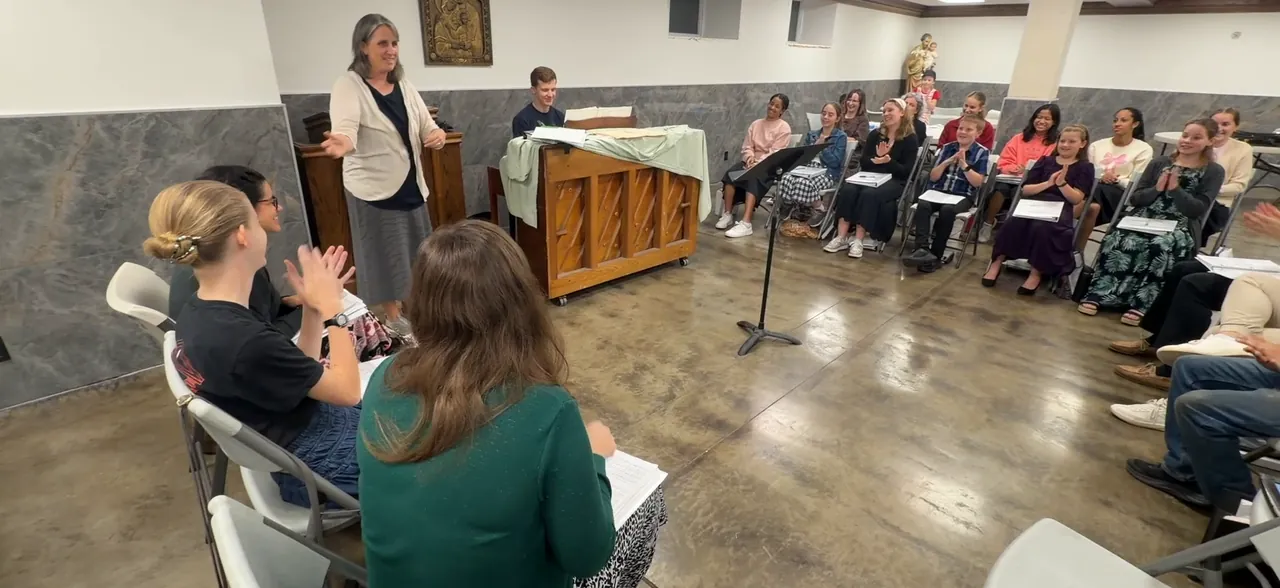
If the Church’s music stirs your heart, consider offering your voice to God in the choir. We hold brief auditions three times a year: at the end of August, October, and January. For more info or to schedule, please write to Meghan Onochie through the contact form (choose Church Choir).
In conspectu Angelorum psallam tibi
“I will sing praise to thee in the sight of the angels.” Psalm 137:1